
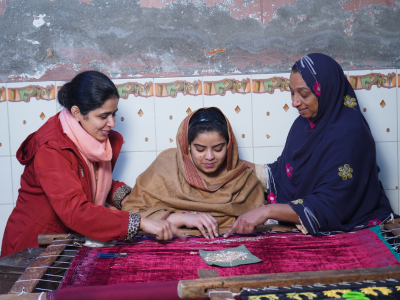
With the vision and support of SEWA Punjab, this initiative was undertaken to empower and uplift the design capacity and technical skills of artisan behns, especially in the traditional crafts of Phulkari and Adda Aari work in Sanour and Malerkotla. Through dedicated efforts and guidance from artisan trainers, the program has become a journey of skill enhancement, creativity, and self-reliance for women artisans. Since July 2024, women who had earlier received basic embroidery training through the ITC program have been learning how to transform their craft into market-ready products while preserving the beauty and authenticity of traditional techniques.
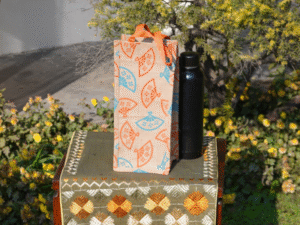
Focused on the empowerment and skill upliftment of rural women, SEWA Punjab conducted regular capacity-building sessions to enhance the design capacity and technical skills of behns in traditional crafts such as Phulkari and Adda-Aari embroidery. Through training in stitching, finishing, and product-making, women artisans developed products with improved quality and market appeal while preserving traditional craftsmanship. The initiative also encouraged cluster-based livelihoods, enabling behns to work collaboratively from SSK centers and their homes. Expanding to Moga, Nabha, and Mohali, training sessions in jute bag making, stitching, and kit-making further strengthened confidence, creativity, and sustainable livelihood opportunities for women artisans.
In the heart of Sanour, SEWA Punjab is breathing new life into the timeless tradition of Phulkari. By fostering a growing collective of rural women artisans, we are transforming ancestral craft into sustainable livelihoods.
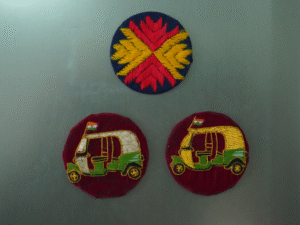
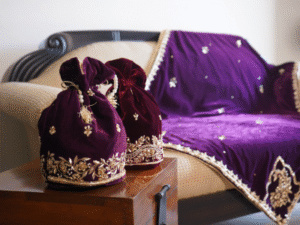
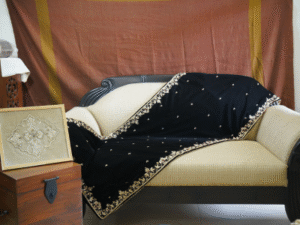
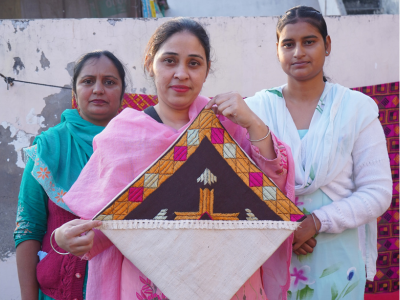
Through dedicated skill-building and collaborative workshops, our behns have mastered the fine balance of intricate embroidery and high-quality finishing. Today, this craftsmanship comes to life in a contemporary collection—from elegant sarees and stoles to modern home essentials like runners, cushion covers, and handcrafted magnets. Every stitch tells a story of empowerment, designed for the global market and ready for bulk partnership.
In Malerkotla, many behns are skilled in traditional Adda-Aari embroidery using dabka, nakshi, and moti work. To support women new to the craft, SEWA Punjab organized Adda embroidery training sessions between January and March 2024 with community trainer Safia ben, through which 51 women received training.
Further capacity-building sessions and home visits were conducted in July 2024 to improve embroidery alignment, finishing, and overall product quality, helping behns refine their craftsmanship and prepare for better market opportunities.
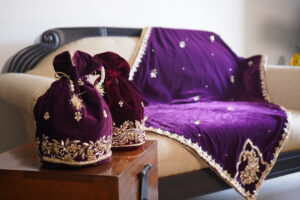
SEWA Punjab continued empowering women artisans in Sanour and Malerkotla through skill development, product design, and livelihood opportunities. New Phulkari products including stoles, sarees, cushion covers, table mats, runners, fridge magnets, and potlis were developed and showcased at exhibitions and community events. Special handcrafted Phulkari sarees were also created to celebrate and promote Punjab’s traditional embroidery heritage. In Sanour, behns received Phulkari work orders through community partnerships, while continuous training sessions strengthened their product-making and finishing skills. In Malerkotla, 51 women were trained in traditional Adda-Aari embroidery under the guidance of community trainer Safia ben. A key focus of the initiative was building a collective enterprise spirit by forming artisan clusters where women can collaborate on product development, sample creation, and sustainable livelihood generation.


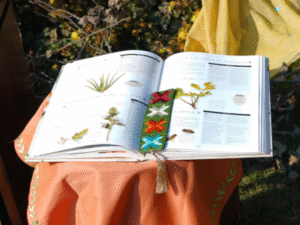
The initiatives undertaken by SEWA Punjab reflect a strong commitment toward inclusion, women’s empowerment, and sustainable livelihood creation across various districts of Punjab. Through continuous capacity-building sessions, skill enhancement training, and opportunities for product development and exhibitions, women artisans are being encouraged to become financially independent and active contributors to the formal economy. At the same time, the initiative plays an important role in cultural preservation by reviving traditional Punjabi crafts such as Phulkari and Adda-Aari embroidery and thoughtfully integrating these techniques into modern products like tote bags, bookmarks, luggage tags, stoles, and home décor items. By blending heritage craftsmanship with contemporary market needs, SEWA Punjab is not only strengthening artisan communities but also ensuring that Punjab’s rich craft traditions continue to thrive for future generations.
Meet Our Artisan Behns -Faces Behind the Craft

With 20 years of experience passed down from her mother, Parvinder now serves as our dedicated community Phulkari trainer, mentoring the next generation of artisans.
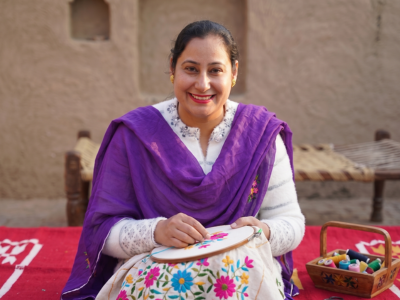
A dedicated mother of twins who turned her training into artistry, Sakinder specializes in charming Phulkari accessories, from intricate bookmarks and keychains to delicate pouches and slings.
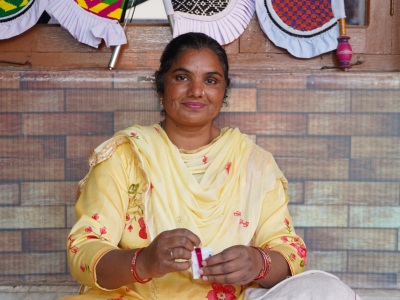
As our resident embellisher, Sapinder meticulously adds the final touches to every piece, from hand-crafted tassels to flawless finishing details.
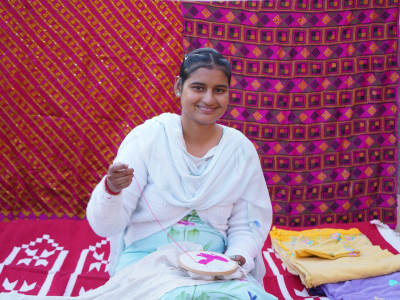
A passionate young artisan who found both creative expression and financial independence through Phulkari, she is the talent behind our popular, signature boho-style cushions.
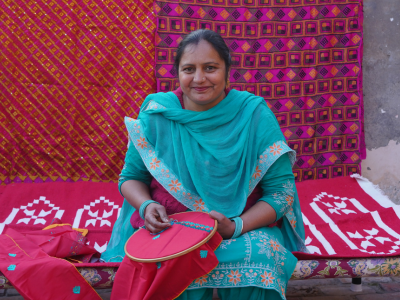
Balancing motherhood with her craft, Baljit creates exquisite chope da mor embroidery that has become a standout favorite among customers at our fairs.
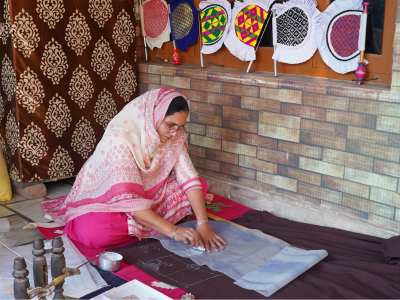
Our most seasoned artisan, Harwinder brings unparalleled expertise to the group, seamlessly blending Phulkari embroidery with advanced tracing, stitching, and knitting techniques.
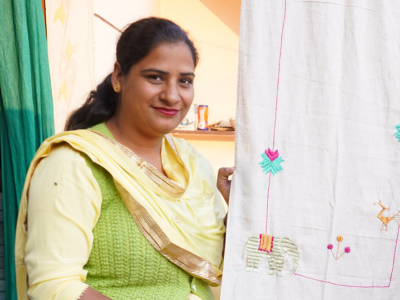
Renowned for her expertise in the iconic Veer-Zara motif, she continues to push her creative boundaries by mastering a diverse array of traditional patterns.
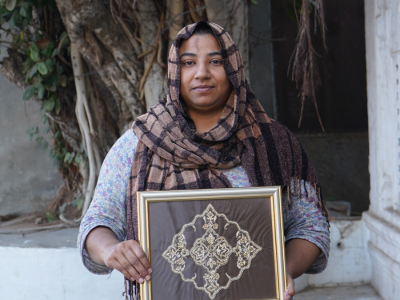
Grows under the shadow of her two elder sisters she adopted the adda craft so precisely that she become proficient in her ancestral skill and helps other to learn it.
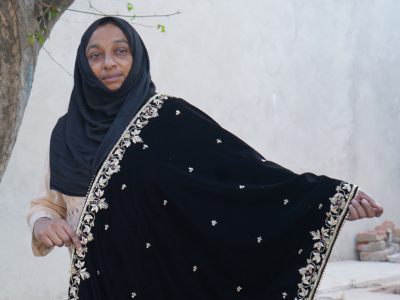
Our community trainer comes from family who doing Adda-Ari embroidery from many generations, now training sewa behans to empower them while siting at home in malerkotla
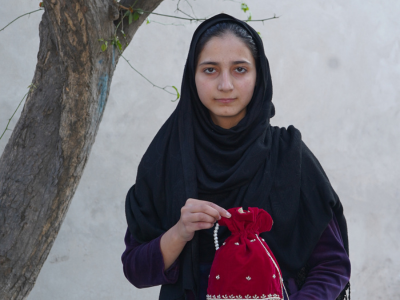
Young enthusiastic girl learned the adda technique to help her family
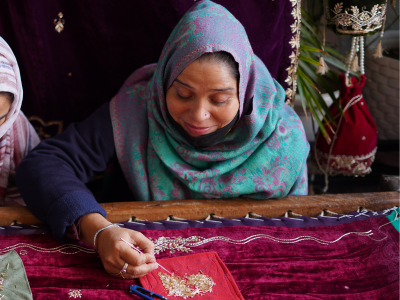
Single mother learned adda work from our community trainer and grasp this skill so accurately that today she makes stoles and potlis for us.